We develop methods and tools that turn large-scale biomedical data into real discovery.
Research Focus
Single Cell & Spatial Omics
Mapping cell types in tissue and resolving cellular heterogeneity — from spatial transcriptomics to single-cell data.
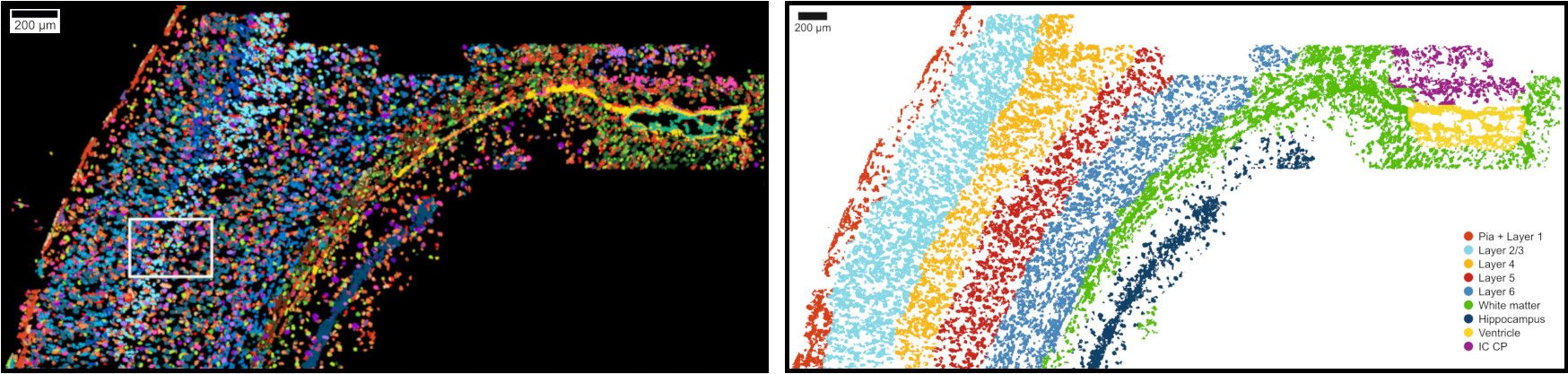
We develop methods that infer cell types directly from in-situ spatial transcriptomics signals without relying on cell segmentation — our SSAM framework couples kernel density estimation with an adversarial autoencoder to map the cellular architecture of human and mouse brain tissue. We also analyze single-cell transcriptomes to dissect tumor heterogeneity, cell-state transitions, and tissue organization — from glioblastoma brain organoids to colorectal cancer — linking single-cell states to genomic alterations and therapeutic response.
Widely-used web tools for CRISPR guide design and off-target analysis.
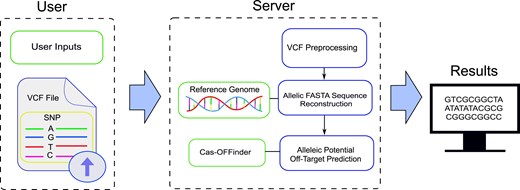
We build open, web-based bioinformatics tools for genome editing that are used worldwide — including Cas-OFFinder, Cas-Designer, Cas-Analyzer, and Digenome-seq analysis. Recent work extends off-target prediction to be variant-aware, accounting for individual genetic variation.
Deep and probabilistic models for biology — and AI as a daily research tool.
Machine learning runs through everything we do — from the adversarial autoencoder at the core of SSAM to probabilistic models of large-scale omics data. We also study how AI can make research itself more transparent and reproducible, and we use AI tools in our daily research workflow.
A global consortium integrating spatial multi-omics, advanced tumor models, and interpretable AI to design nanotherapeutics for hard-to-treat cancers. Pusan National University is a partner (coordinated by Ankara University). Funded by the European Union under the Horizon Europe MSCA Staff Exchanges programme.
Domestic Projects
Study on 3-dimensional reconstruction of spatially resolved transcriptomics data at a single-cell resolution and development of visualization tools
We develop algorithms and visualization tools that reconstruct single-cell-resolution spatial transcriptomics data in three dimensions.
CellularSpace Foundation Model
A multi-institution project building CellularSpace — an ultra-high-resolution, multimodal foundation model for spatial transcriptomics that preserves sub-cellular molecular patterns by fusing SSAM gene-expression density maps with H&E pathology images. The lab leads its lightweight U-Net/Transformer architecture and a no-code, AI-agent web platform. By building a foundation model at this scale, our researchers work at the leading edge of AI for biology.
Digital-Convergence Next-Generation Materials Development
A program developing next-generation materials technology through digital convergence, with Jeonbuk National University, Kangwon National University, Kyungpook National University, and Seeders. Our lab develops an AI-driven platform for high-efficiency gene-editing target design, and builds and deploys its web interface.
Gel Replica-Based High-Resolution, Large-Area Spatial Transcriptomics
A project developing a gel replica-based platform for low-cost, high-resolution, large-area spatial transcriptomics — overcoming the limits of NGS-based approaches through high-density barcode gel replicas and gel-based precision mRNA blotting. Our lab develops the data analysis and visualization methods for the platform. Supported by the Samsung Future Technology Fostering Program.
Development of a web-based tool for efficient aptamer SELEX genomic data analysis
We develop a browser-based tool for analyzing the large-scale sequencing data generated during aptamer SELEX — using AI both to build the tool and to analyze the data, helping researchers identify optimal aptamer candidates quickly.
Practical Digital-Bio Specialist Training
A field-oriented digital-bio workforce program training biomedical + AI talent through prediction and mechanism analysis of systemic-inflammation-mediated Alzheimer's disease, with Keimyung University School of Medicine and Kyung Hee University. Trainees gain hands-on experience at the intersection of medicine and AI.
Bio-Data Industry Specialist Training
An MSc/PhD training program building the core technical talent the bio-data industry needs amid the global shift in biotech paradigms — producing and supplying high-level experts specialized in bioinformatics, bio data science, and pharmaceutical-bio applications. Run with the Korea Biotechnology Industry Organization, Hanyang University, Korea University, and Seoul National University.
Associations & Partners
Single Cell & Spatial Omics Korea (SCSOK)
An open community of Korean researchers — both experimental and computational — working in single-cell and spatial omics, spanning biology, medicine, computer science, statistics, mathematics, and engineering. Members share knowledge and collaborate, chiefly through a Zulip workspace and GitHub. Our lab leads SCSOK together with the Institute for Basic Science (IBS) and Soongsil University.
KASRA — Korean Association for Applied Science Research
Korea Association for Science Research & Applications (응용과학연구협회) — a nonprofit working to break down institutional silos in Korean research by enabling open exchange and shared resources across organizations. Its initiatives span neutral academic conferences, cross-institution graduate education, shared core facilities, scientific publishing (terminology, textbooks, and open journals), and, in time, independent research institutes modeled on Max Planck and Fraunhofer. Our PI, Jeongbin Park, serves as its president.